Did you know that nearly one in 13 children in the U.S. live with a food allergy, making nut-free party snacks essential? According to the CDC, food allergies affect millions, so hosts need safe, delicious options that everyone will love. In that spirit, if you want a bright, herb-forward sauce that keeps all the flavor but skips the pine nuts, try Pesto Without Pine Nuts today.
Many cooks expect pine nuts to define pesto, yet you can make a vibrant, creamy pesto using affordable, allergy-friendly swaps. As a chef with 12 years of recipe development and menu consulting experience, I tested almond, sunflower seed, and even white bean versions to preserve texture and flavor while avoiding tree nuts. For nutrition context, Harvard’s Nutrition Source explains how plant-based fats and herbs support heart health, which helps when you balance pesto ingredients for flavor and nutrition (pesto without nut spesto recipe ).
Below you’ll find quick ingredient choices, timing, step-by-step instructions, nutrition and healthier swaps, serving ideas, storage tips, common mistakes to avoid, and simple FAQs that answer what most cooks ask first. In this article, we will cover clear ingredient lists, timing, step-by-step recipes, nutrition and health-conscious swaps, packaging and serving tips, plus FAQs to make perfect nut-free pesto every time.
Table of Contents
Ingredients

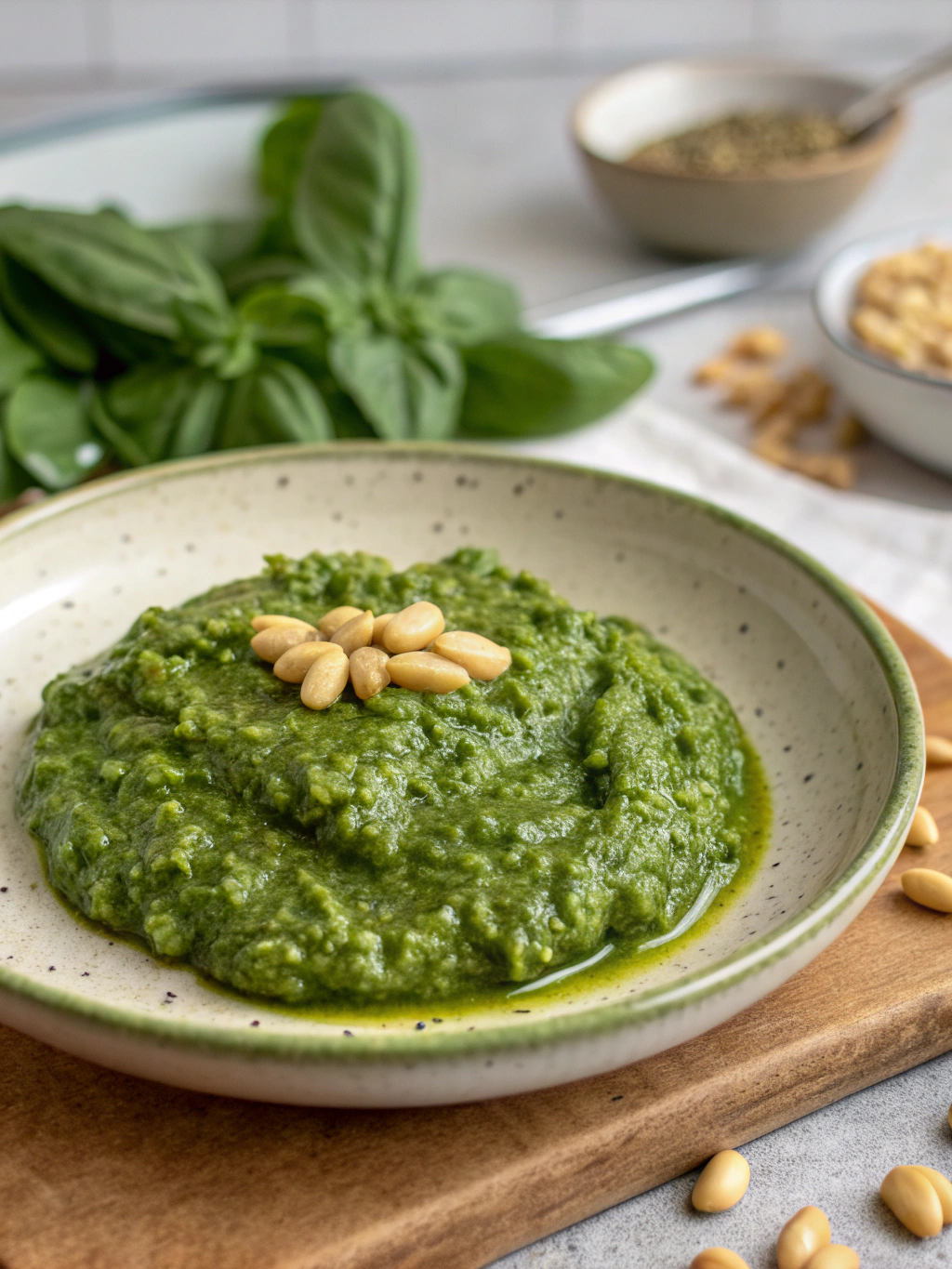
Use fresh basil, good-quality olive oil, garlic, lemon, and parmesan (or a vegan parm) as your flavor base. Replace pine nuts with any of these substitutes depending on allergies, budget, and texture preference:
- Toasted sunflower seeds, nut-free, creamy when blended.
- Toasted pumpkin seeds (pepitas) , slightly earthy, great for depth.
- Blanched almonds, buttery and rich (not nut-free).
- Walnuts , robust, great for rustic pesto (not nut-free).
- White beans (cannellini) are,ultra-smooth, lower-fat option and allergy-friendly.
- Rolled oats inexpensive thickener for a very mild flavor.
Substitution tips: toast seeds lightly for 3–5 minutes to amplify flavor; drain and rinse beans thoroughly for a clean taste; choose mild olive oil to avoid overpowering basil.
For more nut-free pesto ideas, see an expanded guide to nut-free pesto options that balance texture and allergy safety.
Summary: Choose toasted seeds for a similar mouthfeel, or beans for a creamy, allergy-safe sauce; simple tweaks keep pesto vibrant and safe.
Timing
Plan for a total of about 15–25 minutes depending on your substitute. Using seeds or nuts takes 15–20 minutes, while bean-based pesto takes closer to 10–15 minutes. Many nut-free pestos take about 20% less active blending time than traditional nut-rich pestos because beans reach creaminess faster.
| Step | Time |
|---|---|
| Toast seeds/nuts | 3–5 minutes |
| Prep basil & garlic | 5 minutes |
| Blend & adjust | 3–7 minutes |
| Total active time | 10–20 minutes |
Make-ahead tip: pesto improves after a few hours as flavors meld; refrigerate up to 3–4 days or freeze in ice cube trays for 1–3 months.
Summary: You can make most nut-free pestos in under 20 minutes; beans speed blending while seeds need light toasting and a few extra minutes.
Step-by-Step Instructions
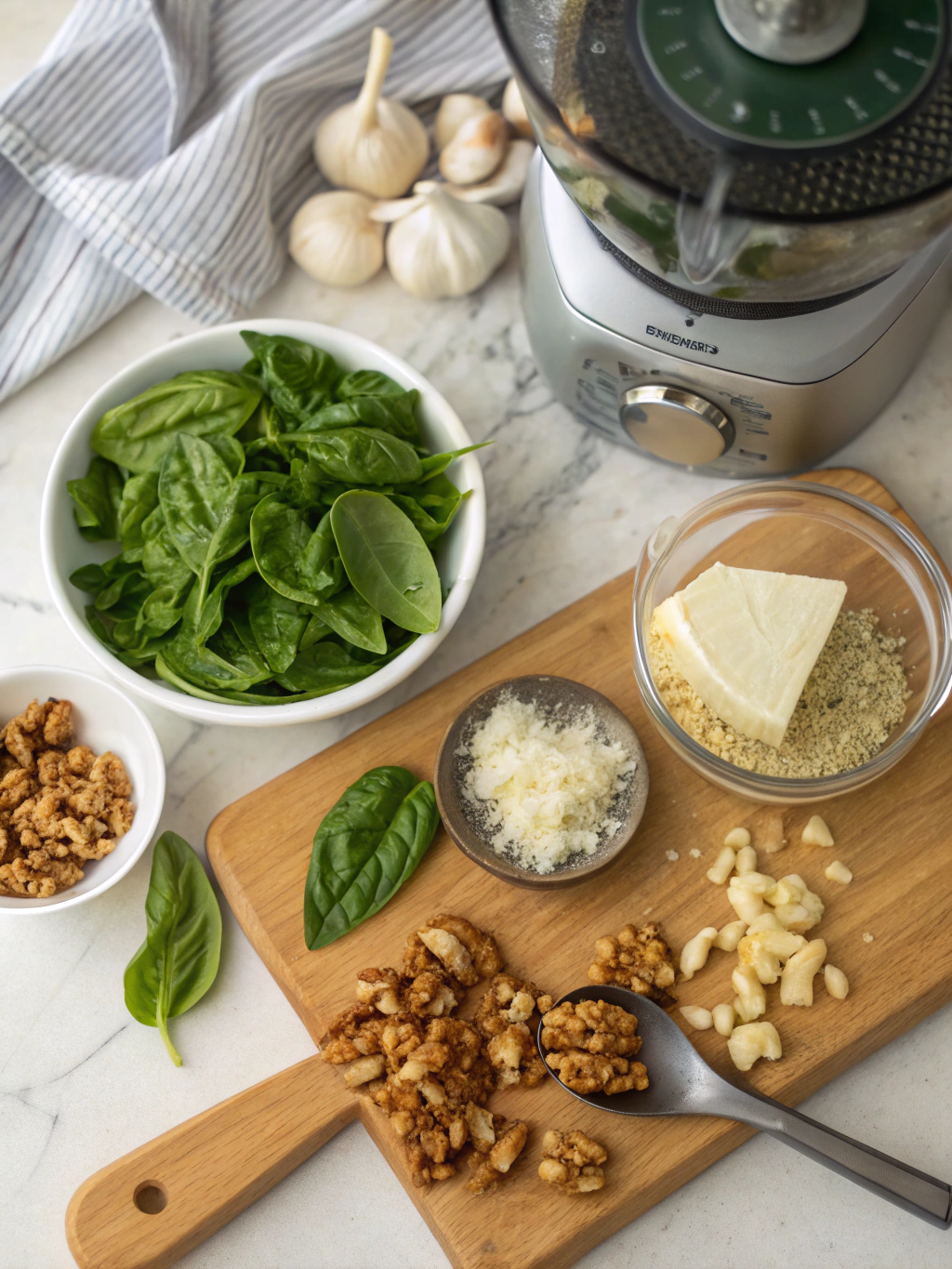
Step 1 : Prep and Toast
First, measure 2 cups packed fresh basil, 1/3–1/2 cup substitute (sunflower seeds or 1/3 cup cooked white beans), 2–3 cloves garlic, 1/2 cup olive oil, 1/3 cup grated Parmesan, and juice of half a lemon. Next, toast seeds in a dry skillet for 3–5 minutes until fragrant, stirring continuously to avoid burning.
Step 2 : Blend and Finish
Then combine basil, seeds or beans, garlic, and cheese in a food processor. Pulse while slowly drizzling in olive oil until you reach a spoonable texture. Finally, adjust salt, pepper, and lemon to taste. If the pesto looks grainy, add a tablespoon of water or extra oil to smooth it out.
Pro tip: reserve a tablespoon of seeds to stir in at the end for texture contrast. For variations that use walnuts or almonds, check a concise comparative method in our pistachio pesto recipe.
Summary: Toast seeds, pulse with herbs and cheese, drizzle oil slowly, and taste as you go for the perfect consistency and brightness.
PrintHow to Make Pesto Without Pine Nuts: Easy Substitutes That Work

Make allergy-friendly pesto without pine nuts using simple pantry substitutes. Creamy, vibrant, and perfect for any dish.
- Prep Time: 10 minutes
- Cook Time: 5 minutes
- Total Time: 15 minutes
- Yield: 1 cup
- Category: Sauces & Dips
- Method: Blending
- Cuisine: Italian
- Diet: Vegetarian
Ingredients
2 cups packed fresh basil
1/3 cup toasted sunflower seeds or 1/3 cup cooked white beans
2–3 cloves garlic
1/2 cup olive oil
1/3 cup grated Parmesan or vegan parm
Juice of half a lemon
Salt and pepper to taste
Instructions
1. Toast seeds in dry skillet for 3–5 minutes until fragrant.
2. Prep garlic, basil, and lemon.
3. Add basil, seeds or beans, garlic, cheese to a food processor.
4. Pulse while drizzling olive oil until creamy.
5. Adjust with lemon, salt, or water as needed.
6. Optional: stir in reserved seeds for texture.
Notes
Use white beans for low-fat vegan pesto.
Refrigerate 3–4 days or freeze for 1–3 months.
Replace cheese with nutritional yeast for dairy-free.
Nutrition
- Serving Size: 2 tbsp
- Calories: 120
- Sugar: 0
- Sodium: 80
- Fat: 11
- Saturated Fat: 2
- Unsaturated Fat: 9
- Trans Fat: 0
- Carbohydrates: 2
- Fiber: 0.5
- Protein: 3
- Cholesterol: 3
Nutritional Information
Below is a typical nutrition snapshot for a 2-tablespoon serving of seed-based pesto (using sunflower seeds). Values vary with oil and cheese choices.
| Calories | Fat | Protein | Carbs |
|---|---|---|---|
| 120 kcal | 11 g (mostly unsaturated) | 3 g | 2 g |
Seeds provide vitamin E, magnesium, and healthy fats; beans add fiber and plant protein while lowering fat. For authoritative nutrient data and safe handling guidance, consult USDA resources (USDA food safety and nutrient data).
Summary: Seed-based pestos deliver healthy unsaturated fats and important micronutrients, while bean-based versions reduce calories and raise fiber.
Healthier Alternatives
Lower-Fat and Vegan Options
Swap half the oil for aquafaba or low-sodium vegetable broth to cut fat while retaining creaminess. Use nutritional yeast instead of Parmesan to make pesto vegan while keeping savory umami notes.
Allergy-Friendly & Special Diets
Choose toasted sunflower seeds or white beans for nut-free diets. For gluten-free, ensure your cheese or store-bought ingredients carry a gluten-free label. Also, reduce sodium by using unsalted seeds and less cheese, then finish with lemon to brighten flavor.
Summary: Use beans or seeds for allergy-friendly pesto, and reduce oil or swap cheese for nutritional yeast to meet vegan or lower-fat goals.
Serving Suggestions

Pesto works as a pasta sauce, spread, dip, or finishing drizzle. Try these creative ideas:
- Stir into warm pasta with a splash of pasta water for silky coating.
- Mix with ricotta as a sandwich spread or crostini topper.
- Use as a dip for raw veggies or finger foods at party buffets.
- Swirl into soups or roast vegetables with a spoonful for brightness.
Serve chilled or room temperature; garnish with extra seeds or grated cheese. For additional presentation tips and pairings, explore our collection of recipes and tips at Easy Um Recipes.
Summary: Use pesto across dishes, pasta, sandwiches, dips, and soups, and finish with seeds or cheese to elevate presentation and texture.
Common Mistakes to Avoid
- Adding too much oil at once drizzle slowly to control texture.
- Skipping the toast untasted seeds can taste flat and raw.
- Over-blending stops, leaving a slightly textured finish for improved mouthfeel.
- Using old basilbalways pick fresh leaves for bright flavor.
Summary: Toast seeds, add oil gradually, and stop pulsing before the mixture becomes a puree to avoid flavor and texture pitfalls.
Storing Tips
- Refrigerate in an airtight container for 3–4 days; press plastic wrap directly onto the surface to limit oxidation.
- Freeze in tablespoon or ice-cube portions for 1–3 months; thaw overnight in the fridge.
- Refresh by stirring in a teaspoon of oil or lemon juice after thawing.
Summary: Refrigerate up to 4 days, freeze in portions, and refresh with oil or lemon before serving to restore brightness.
Frequently Asked Questions
1. Can you make pesto without pine nuts that still tastes authentic?
Yes. Using toasted sunflower seeds or blanched almonds preserves the nutty, creamy texture, while basil, garlic, lemon, and good olive oil keep the classic pesto flavor. Adjust salt and cheese to match the familiar savory balance.
2. Is sunflower seed pesto allergy-safe?
Sunflower seed pesto avoids tree nuts but not seeds; it suits many who avoid tree-nut allergies. However, always confirm guest-specific allergies, and prevent cross-contact when preparing in shared kitchens.
3. How long does nut-free pesto last in the fridge?
Store homemade nut-free pesto in an airtight container with surface protection for up to 3–4 days. For longer storage, freeze in small portions for up to 3 months and thaw in the refrigerator before use.
4. Can I use canned beans to make pesto? Do they change flavor?
Canned cannellini or chickpeas make smooth, low-fat pesto. Rinse well to reduce sodium and pulse sparingly to retain a fresh herb flavor. Beans mellow the sauce, so add extra lemon and garlic to boost brightness.
Conclusion
Making memorable Pesto Without Pine Nuts proves simple and flexible: choose toasted seeds for nut-like texture or beans for allergy-safe creaminess, control oil for consistency, and finish with lemon and salt for brightness. Try different substitutes to match taste and dietary needs, then save or freeze portions for quick meals. If you enjoyed these tips, explore our related guides on creamy pestos, nut-based variations, and nut-free pesto options to expand your sauce repertoire.
Author: Chef Caroline — recipe developer and food writer. A flavor lover and kitchen daydreamer who believes every meal should spark joy. I’m here to help you turn everyday ingredients into something magical.