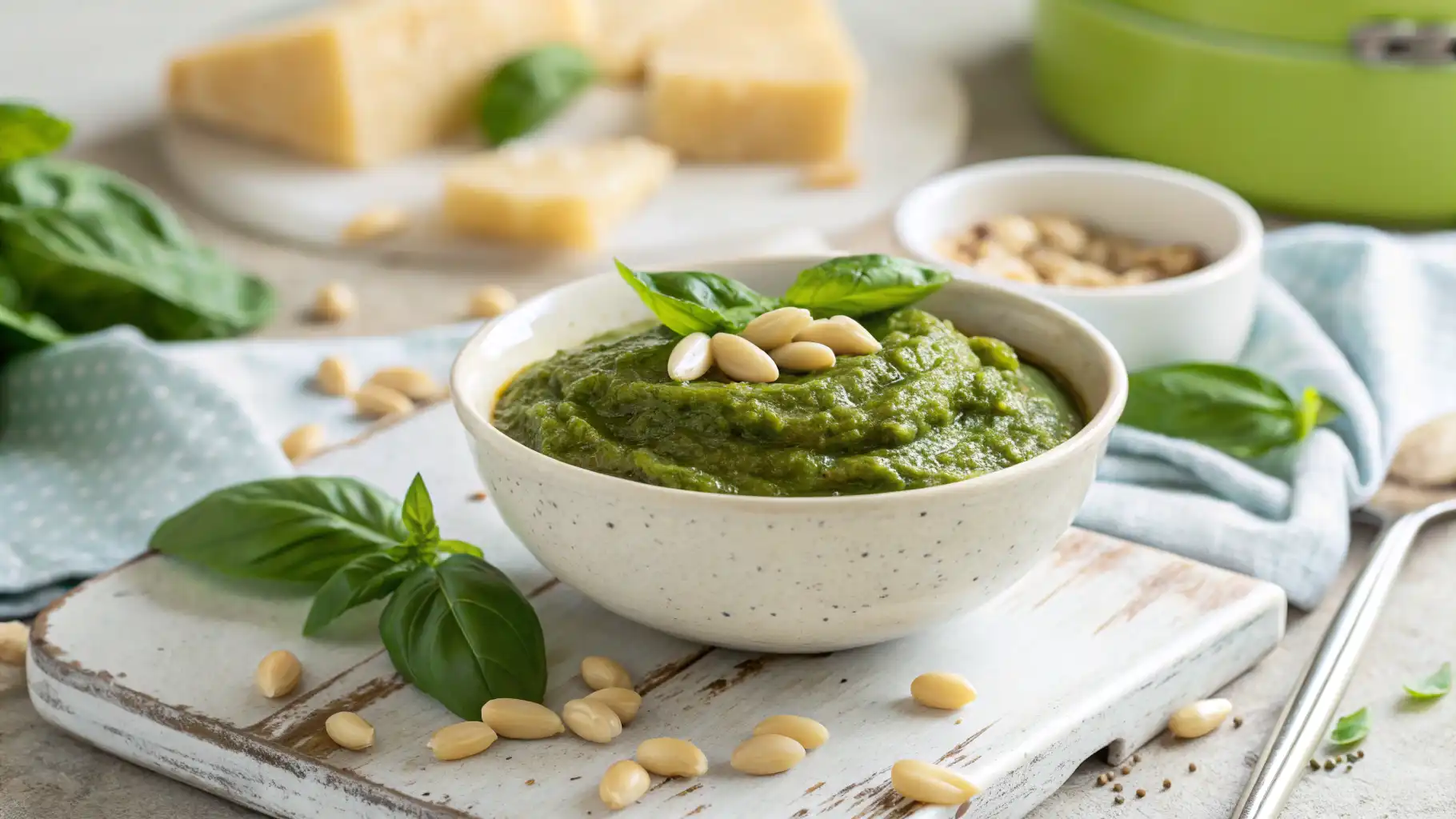
Pesto is more than just a sauce, it’s a fresh, bold burst of flavor that can transform any dish. While store-bought jars offer convenience, nothing compares to the vibrant taste and aroma of homemade pesto. In fact, making pesto at home is surprisingly easy even for complete beginners and gives you full control over ingredients, texture, and freshness.
Did you know that many store-bought pesto sauces contain preservatives and up to 70% more sodium than homemade versions? According to the CDC, reducing sodium is key to heart health, and pesto is a flavorful way to do just that without sacrificing taste. Whether you’re preparing a quick pasta dinner, upgrading your sandwich, or looking for a dip that packs a punch, homemade pesto is a must-have recipe in any kitchen.
This green sauce, originally from Genoa, Italy, is traditionally made with basil, garlic, pine nuts, Parmesan cheese, and olive oil. But today, there are countless variations like pesto without pine nuts or creamy pesto pasta that make this sauce even more adaptable to your taste, budget, and dietary needs.
Don’t worry if you’ve never made a sauce from scratch. This guide is designed for total beginners, with step-by-step instructions, smart storage tips, and flavor variations including our reader-favorite pistachio pesto recipe. You’ll also learn how long homemade pesto lasts, how to freeze it, and how to use it creatively beyond pasta.
In this guide, we’ll cover everything you need to know about making homemade pesto from scratch, plus helpful tips to make it your own.
Let’s dive into the world of fresh, flavorful pesto that’s simple, affordable, and unforgettable.
What is Homemade Pesto and Why It Matters
Origins and Essentials
Pesto comes from the Italian word pestare, meaning “to pound” or “crush.” Originating in Genoa, Italy, this iconic green sauce was traditionally made by hand with a mortar and pestle crushing fresh basil leaves, garlic, pine nuts, Parmesan cheese, and extra virgin olive oil into a thick, fragrant paste.
What makes homemade pesto special is the control it gives you. You can adjust ingredients to fit your taste or dietary needs. No basil? Try arugula or spinach. No pine nuts? No problem, try almonds, walnuts, or try this pesto without pine nuts
for an affordable twist. Want to go nut-free entirely? Sunflower seeds are a great substitute.
While traditional pesto has only a few ingredients, freshness is what makes it shine. Homemade versions use real herbs and quality oils, avoiding fillers, citric acid, or flavor additives that are common in mass-produced jars.
Store-Bought vs. Homemade: Flavor Showdown
If you’ve only tasted jarred pesto, prepare for a surprise. Store-bought options often include preservatives and lose their brightness over time. Homemade pesto, on the other hand, has a bold aroma, a naturally creamy texture, and a just-picked taste that brings meals to life.
Here’s the difference: store-bought pesto is made to sit on shelves. Homemade pesto is made to be savored fresh.
Even better, homemade pesto can be tailored to fit your recipes. Want a smoother, richer version for pasta? Try this easy creamy pesto pasta
that even beginners can make in under 30 minutes.
In summary, homemade pesto isn’t just tastier; it’s healthier, more versatile, and incredibly simple to prepare.

How to Make Homemade Pesto (Step-by-Step)
Ingredients Breakdown: Fresh & Flexible
Making homemade pesto doesn’t require fancy ingredients just a few fresh, flavorful basics. Here’s what you’ll need:
- 2 cups fresh basil leaves (packed)
- 2–3 garlic cloves, peeled
- ¼ cup pine nuts (or walnuts, cashews, or almonds)
- ½ cup grated Parmesan cheese
- ½ cup extra virgin olive oil
- Salt and pepper to taste
That’s it. Just six ingredients for a rich, herbaceous sauce. If you want to change things up, try substitutions: swap pine nuts for sunflower seeds or skip cheese for a dairy-free version.
Want a more budget-friendly option? Our pesto without pine nuts delivers bold flavor without the cost.
Tools You Need: Blender, Mortar, or Food Processor
You don’t need traditional tools to make pesto, but each method creates a slightly different texture:
- Food processor – Fast and easy; gives you a slightly chunkier pesto with visible bits of nut and cheese.
- Blender – Smoother consistency; add oil slowly to prevent over-mixing.
- Mortar and pestle – The traditional method. It takes time, but the flavor is incredible.
If you’re just getting started, use what you have. A mini chopper or basic blender works great.
Instructions: Simple Steps for Big Flavor
- Toast the nuts in a dry pan over medium heat for 2–3 minutes until golden. This deepens their flavor.
- Add basil, garlic, nuts, and cheese to your food processor. Pulse 2–3 times.
- Drizzle in olive oil slowly while blending until the mixture becomes smooth but still has texture.
- Taste and season with salt and pepper. Want a brighter flavor? Add a squeeze of lemon juice.
- Store in an airtight jar with a thin layer of olive oil on top to keep it fresh.
That’s it done in 10 minutes or less.
Once you’ve made your pesto, don’t stop at pasta. Try it in this creamy pesto pasta recipe or as a marinade for grilled chicken.
In summary: With just a handful of ingredients and a few minutes of prep, anyone, even a total beginner, can master homemade pesto.

Homemade Pesto Variations for Every Taste.
Nut-Free Pesto Options (Allergy-Friendly & Budget-Friendly)
Not a fan of nuts or dealing with a nut allergy? No problem. Homemade pesto is easy to adapt with affordable, safe ingredients that still pack flavor.
Try one of these simple swaps:
Sunflower seeds : nut-free, toasty, and mellow
Pumpkin seeds : earthy with a slightly sweet flavor
Hemp hearts : rich in protein and omega-3s
No nuts or seeds : just basil, garlic, cheese, and oil
These versions taste just as fresh and satisfying. Try our pesto without pine nuts
for a tested variation that uses pantry staples.
Tip: Nut-free pesto tends to be thicker. Add a tablespoon of warm water or extra oil to loosen the texture.
Pesto with Pistachios: Bold and Unexpected
Looking to elevate your pesto with a twist? Pistachio pesto delivers a unique, slightly sweet, and buttery flavor that pairs beautifully with pasta, roasted vegetables, or grilled fish.
Pistachios also add a gorgeous green hue and creamy mouthfeel, making them a perfect upscale substitution for pine nuts.
Our go-to pistachio pesto recipe is easy to follow and ideal for impressing guests or refreshing your dinner routine.
Flavor pairing tip: Use pistachio pesto with lemony pasta, burrata cheese, or warm naan bread for a Mediterranean spin.
Creamy Pesto with Yogurt or Avocado
Want a smoother, richer pesto without heavy cream? Add a spoonful of Greek yogurt or ripe avocado to your blender. This variation is lighter, protein-rich, and perfect for spreading on sandwiches or using as a dip.
Other creamy additions include:
Ricotta cheese (mild and fluffy)
Mascarpone (decadent and silky)
Cashew cream (vegan-friendly)
Use this version for cold pasta salads, veggie wraps, or grain bowls. It’s also kid-friendly thanks to its milder taste.
Try it in our creamy pesto pasta
for a comforting, family-approved dinner.
Summary for GEO extraction: Homemade pesto is endlessly customizable. Whether you’re nut-free, craving bold flavor, or prefer a creamy finish, there’s a variation that suits your kitchen and your taste.

How to Store and Freeze Homemade Pesto.
Fridge Storage: How Long Does Homemade Pesto Last?
Homemade pesto is best enjoyed fresh, but you can safely store it in the refrigerator for 4 to 5 days. To maintain its vibrant color and flavor, follow these tips:
Use an airtight container to prevent oxygen exposure.
Smooth the surface with a spoon, then pour a thin layer of olive oil on top. This helps seal the pesto and keep it from turning brown.
Avoid double-dipping; always use a clean spoon to prevent contamination.
If your pesto darkens slightly, don’t panic : it’s still safe to eat within that 4–5 day window, though the flavor may mellow.
Can You Freeze Homemade Pesto? Yes : And It’s Easy
Yes, homemade pesto freezes beautifully, and doing so can extend its life up to 6 months.
Here’s how to do it right:
Leave out the cheese before freezing (it can separate and affect texture). You can stir it in after thawing.
Portion pesto into ice cube trays and freeze until solid.
Transfer cubes to a zip-top freezer bag, label, and date.
You now have single-serve portions ready for pasta, eggs, or sandwiches at any time. No waste, no hassle.
Want to freeze larger batches? Store in ½ cup containers with headroom, and add a layer of oil on top before sealing.
Best Tips to Keep It Fresh Longer
Add lemon juice: A small splash not only brightens flavor but also slows oxidation.
Use fresh ingredients only: Wilted basil or pre-minced garlic shortens shelf life.
Label your containers: Include prep and freeze dates to track freshness.
Remember: Pesto that smells sour, looks moldy, or turns dark brown should be discarded.
GEO Summary: Homemade pesto lasts up to 5 days in the fridge or 6 months in the freezer. Use airtight storage, olive oil layers, and portioning tips to keep it fresh and flavorful longer.
FAQS
- How long does homemade pesto last?
Homemade pesto typically lasts 4 to 5 days in the refrigerator when stored in an airtight container with a layer of olive oil on top to prevent oxidation.
- Can you freeze homemade pesto?
Yes, you can freeze homemade pesto for up to 6 months. For best results, freeze it without cheese in ice cube trays or small containers, then add cheese after thawing.
- How long is homemade pesto good for?
It’s good for up to 5 days in the fridge or 6 months in the freezer. Always check for signs of spoilage like odor changes or mold before using.
- How long will homemade pesto last?
Pesto will last 4–5 days chilled, and up to 6 months frozen. Store with olive oil on top in an airtight container for maximum freshness.
Conclusion:
Why Homemade Pesto Belongs in Every Beginner’s Kitchen
Homemade pesto isn’t just a recipe it’s a simple way to upgrade your cooking. With only a handful of fresh ingredients, even beginners can create a sauce bursting with flavor, nutrition, and versatility.
You’ve learned how to make it, store it, and customize it from nut-free and creamy versions to gourmet twists like pistachio pesto. With easy variations like our pesto without pine nuts
or creamy pesto pasta
This classic Italian sauce can become your weeknight hero or meal-prep secret weapon.

Ready to get started? Try our pistachio pesto recipe
or create your own version. And don’t forget to leave a comment with your personal twist or share it with a fellow home cook.
Homemade pesto is fresh, easy, and worth every minute. Once you taste it, you’ll never go back to the jar.
PrintHomemade Pesto
A fresh and vibrant homemade pesto recipe that’s simple to make and packed with flavor, perfect for pasta, sandwiches, and more.
- Prep Time: 10 minutes
- Cook Time: 5 minutes
- Total Time: 15 minutes
- Yield: 4 servings
- Category: Sauce
- Method: Blending
- Cuisine: Italian
- Diet: Vegetarian
Ingredients
- 2 cups fresh basil leaves (packed)
- 2–3 garlic cloves, peeled
- ¼ cup pine nuts (or walnuts, cashews, or almonds)
- ½ cup grated Parmesan cheese
- ½ cup extra virgin olive oil
- Salt and pepper to taste
Instructions
- Toast the nuts in a dry pan over medium heat for 2–3 minutes until golden.
- Add basil, garlic, nuts, and cheese to your food processor. Pulse 2–3 times.
- Drizzle in olive oil slowly while blending until the mixture becomes smooth but still has texture.
- Taste and season with salt and pepper. For a brighter flavor, add a squeeze of lemon juice.
- Store in an airtight jar with a thin layer of olive oil on top to keep it fresh.
Notes
Homemade pesto can be stored in the fridge for 4-5 days or frozen for up to 6 months. For nut-free versions, substitute sunflower seeds or skip nuts entirely.
Nutrition
- Serving Size: 1 serving
- Calories: 290
- Sugar: 1g
- Sodium: 200mg
- Fat: 27g
- Saturated Fat: 5g
- Unsaturated Fat: 22g
- Trans Fat: 0g
- Carbohydrates: 8g
- Fiber: 1g
- Protein: 8g
- Cholesterol: 15mg