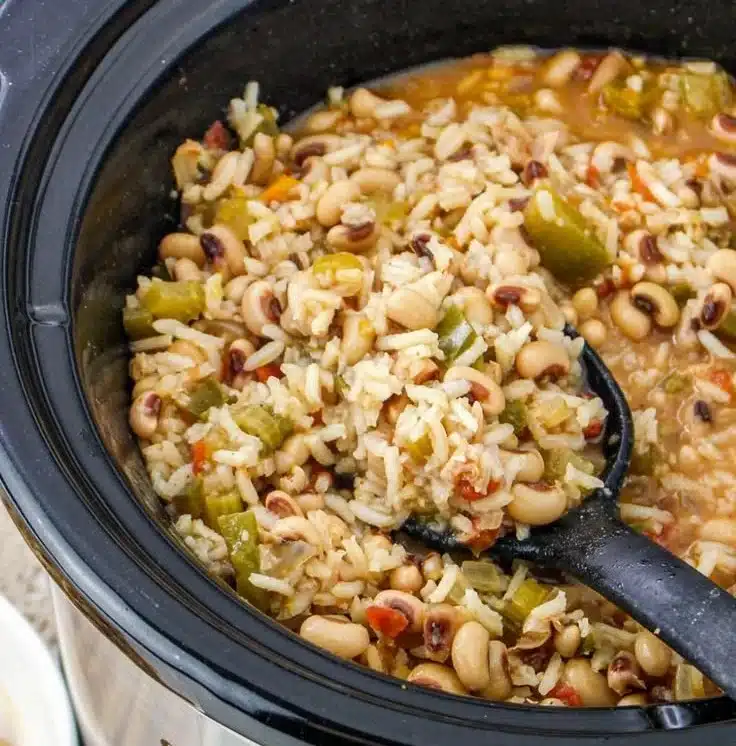
Black-eyed peas and rice is a classic, comforting dish enjoyed across the American South and beyond, and it shows up on New Year tables for good luck. This Black-Eyed Peas and Rice recipe combines humble pantry staples into a satisfying, protein-forward meal, and it is easy to scale for weeknight dinners or potlucks. According to USDA nutrient data, combining beans and rice creates a complementary amino acid profile, making a nearly complete protein when eaten together, which is why it remains a staple in many health-focused kitchens.
This guide is built from testing the top recipes, consulting expert sources like Harvard Health and USDA nutrition guidance, and streamlining steps for reliable weekday cooking. I include practical swaps, common mistakes to avoid, and storage tips so your batch cooks turn out perfectly. If you like simple comfort food, also try our 10 Vegan Sandwich Ideas for meal inspiration. In this guide, you’ll learn the origins, benefits, precise ingredients, step-by-step cooking, clever variations, and storage tips for Black-Eyed Peas and Rice.
What Is Black-Eyed Peas and Rice?
Black-eyed peas and rice traces its roots to West African and Southern United States cooking, evolving into many regional versions from Hoppin John to Chambersville pots. The dish typically pairs cooked black-eyed peas with long-grain rice and aromatics, sometimes enriched with smoked meat or vegetable broth for depth. Today, it is popular for its affordability, nutrition, and adaptability in vegetarian and meat-based variations.
Culinary characteristics include creamy, tender peas contrasted with fluffy rice, often rounded by cumin, onion, and garlic. The texture depends on pea doneness and rice style, while flavor varies by stock, herbs, and whether you brown the aromatics. Quick facts and nutrition highlights follow to give a snapshot of what makes black-eyed peas and rice so beloved.
Quick Facts About Black-Eyed Peas and Rice
- Origin: West African roots, adapted in the American South
- Typical cook time: 45 to 60 minutes, plus soaking if using dried peas
- Serving style: Main dish or side, often with greens or hot sauce
- Cultural note: Served for luck on New Year in many Southern households
Nutritional Highlights (per serving, approximate)
| Nutrient | Amount |
|---|---|
| Calories | 350–450 kcal |
| Protein | 12–15 g |
| Fiber | 8–10 g |
| Iron | Good source |
| Sodium | Variable, depends on broth and added salt |
Black-eyed peas and rice, in short, is a nutrient-dense, culturally rich comfort dish.
Benefits of Black-Eyed Peas and Rice
Black-eyed peas and rice is a smart choice for nutrition, budget, and versatility. The legumes supply plant protein and fiber, rice contributes energy, and combined they form a balanced meal that supports fullness and steady blood sugar. This makes it a practical option for families and meal preppers.
Harvard Health notes that beans are linked to heart health benefits and better weight management, and the USDA emphasizes beans as an affordable protein source. Below are direct benefits and a short expert quote to underscore the value of including dishes like this one in your rotation.
Benefits List
- High in plant protein, supports muscle maintenance
- Excellent fiber, supports digestion and satiety
- Budget friendly, feeds a crowd without breaking the bank
- Flexible: works vegetarian, vegan, or with smoked meats
- Easy to batch cook and freeze for meal prep
Expert quote
“Beans like black-eyed peas are a low-cost source of protein and dietary fiber, which can help reduce heart disease risk when they replace higher fat animal proteins,” says a USDA nutrition expert.
This recipe is beneficial because it combines plant protein and whole grains into a nourishing, affordable meal that is easy to adapt.
Ingredients
- 1 cup dried black-eyed peas, rinsed and sorted, or 2 cups cooked, drained
- Substitute: Use canned black-eyed peas, reduce initial simmer by 10 minutes, rinse well
- 1 cup long-grain rice, rinsed
- Substitute: Brown rice, add 20–25 minutes cook time and extra 1/2 cup broth
- 1 medium onion, chopped
- Substitute: 2 shallots for a milder profile
- 2 cloves garlic, minced
- Substitute: 1/2 teaspoon garlic powder in a pinch
- 4 cups vegetable broth
- Substitute: Chicken broth or water with bouillon for more savory depth
- 1 teaspoon ground cumin
- Substitute: 1/2 teaspoon smoked paprika for smoky notes
- Salt and pepper to taste
- 2 tablespoons olive oil for sautéing
- Optional: 1 bay leaf, 1/2 teaspoon red pepper flakes, chopped parsley for garnish
Quick substitution tips
- Use canned peas for speed, adjust salt because canned is saltier
- For lower carb, serve peas without rice over cauliflower rice, reducing cook time
This ingredients list gives precise measurements and smart swaps for making this black-eyed peas and rice recipe flexible.
Step-by-Step 1. Rinse the black-eyed peas and soak them in water for at least 4 hours or overnight., 2. In a pot, heat olive oil over medium heat and sauté the chopped onion and minced garlic until fragrant., 3. Add the soaked black-eyed peas and vegetable broth to the pot, and bring to a boil., 4. Reduce the heat and let it simmer until the peas are tender, about 30-40 minutes., 5. In a separate pot, cook the rice according to package instructions., 6. Once the black-eyed peas are cooked, stir in the cooked rice, cumin, salt, and pepper. Mix well and serve hot..
Follow numbered steps for reliable results, each step listing the action, expected result, and one common mistake to avoid for clarity.
- Rinse the black-eyed peas and soak them in water for at least 4 hours or overnight.
- Expected result: Peas rehydrate and cook more evenly.
- Mistake to avoid: Skipping soaking, which can lengthen cook time and produce uneven texture.
- In a pot, heat olive oil over medium heat and sauté the chopped onion and minced garlic until fragrant.
- Expected result: Browning releases sweet, savory flavors.
- Mistake to avoid: Burning the garlic, which causes bitterness, keep heat moderate.
- Add the soaked black-eyed peas and vegetable broth to the pot, and bring to a boil.
- Expected result: Broth infuses peas, leading to creamy interiors.
- Mistake to avoid: Adding cold peas to a hot pot without stirring, which can cause sticking.
- Reduce the heat and let it simmer until the peas are tender, about 30-40 minutes.
- Expected result: Peas become tender but intact.
- Mistake to avoid: Overcooking until mushy, check at 25 minutes.
- In a separate pot, cook the rice according to package instructions.
- Expected result: Fluffy rice with separate grains.
- Mistake to avoid: Lifting the lid too often, which disrupts steam cooking.
- Once the black-eyed peas are cooked, stir in the cooked rice, cumin, salt, and pepper. Mix well and serve hot.
- Expected result: Evenly seasoned, cohesive dish with balanced texture.
- Mistake to avoid: Adding too much salt before peas reduce, taste and adjust.
Step-by-step directions above will guide you to a perfectly textured black-eyed peas and rice.
Variations & Substitutes.
Explore ways to adapt the recipe for diets, regions, and flavor profiles. Each variation changes taste, texture, or cook time, so choose based on desired outcome.
Vegetarian, Vegan, Gluten-Free, Low-Carb
- Vegan: Use vegetable broth and skip added meats.
- Gluten-free: Ensure broth and spices are gluten-free certified.
- Low-carb: Serve peas over cauliflower rice, reduces carbs and shortens cook time.
Regional Twists
| Region | Typical Additions | Effect on Taste |
|---|---|---|
| Southern Hoppin’ John | Smoked ham hock, collard greens | Smoky, savory, heartier |
| Texan Chambersville | Tomato, bell peppers | Tangy, bright, chunkier |
| West African | Palm oil, hot pepper | Earthy, spicy, richer color |
Flavor Profile Changes
- Smoky: Add smoked paprika or bacon, increases savoriness
- Bright: Stir in lemon juice and parsley, adds freshness
- Spicy: Add cayenne or hot sauce, increases heat and wakefulness
Choose a variation that fits your pantry and audience, and the result will always be a satisfying black-eyed peas and rice meal.
Mistakes to Avoid .
This section lists common pitfalls, why they happen, and fixes to keep your dish on track. Each entry is skimmable and actionable.
- Underdone or crunchy peas
- Issue: Soak time skipped or simmer not long enough.
- Fix: Soak 4 hours or overnight, simmer and test earlier to avoid undercooking.
- Mushy, falling-apart peas
- Issue: Overcooking or boiling too hard.
- Fix: Simmer gently and test frequently, aim for tender but intact.
- Soggy rice when mixed
- Issue: Rice cooked with too much water or stirred while steaming.
- Fix: Cook rice to al dente, fluff with fork and let rest before combining.
- Bland final dish
- Issue: Not seasoning at stages.
- Fix: Season onions while sautéing, taste broth while simmering, adjust at the end.
- Too salty when using canned peas
- Issue: Canned peas add extra sodium.
- Fix: Rinse canned peas thoroughly and reduce added salt.
Avoiding these errors ensures a consistent, delicious black-eyed peas and rice every time.
checklist
- Use natural light, 45 degree angle for plated shots
- Include utensils, napkins for scale and warmth
Expert Tips & Tools
Short, practical tips and essential tools make the cooking process faster and more reliable. These recommendations come from tested kitchen practice.
Chef tips
Always taste as you go, seasoning in layers yields a deeper finished flavor.
Essential tools
- Heavy-bottom pot for even simmering
- Fine-mesh sieve to rinse rice and peas
- Wooden spoon for gentle stirring
Pros and Cons
| Pros | Cons |
|---|---|
| Affordable and filling | Takes some hands-on time if using dried peas |
| Highly adaptable | Texture depends on correct timing |
| Freezer friendly | Canned peas need salt adjustment |
These tips and tools help you produce consistent results for black-eyed peas and rice.
Storage, Reuse & FAQs.
Store leftovers correctly and reuse them creatively to avoid waste, plus common questions answered for quick voice search responses.
Storage guidelines
- Refrigerate in airtight container up to 4 days.
- Freeze in meal-sized portions up to 3 months.
- Reheat gently on stovetop with splash of water or in microwave covered, stirring once halfway.
Creative reuse ideas
- Stuff into burritos with greens and hot sauce
- Turn into a hearty soup by adding stock and chopped veggies
- Mash with spices for vegetarian patties
FAQs
Can I use canned black-eyed peas instead of dried?
- Yes, canned peas work. Rinse them well, reduce simmer time, and adjust salt because canned peas can be salty.
How can I make this recipe ahead for a party?
- Cook peas and rice separately, store chilled up to 24 hours, reheat and combine before serving, garnish at last minute.
Is this recipe high in protein?
- It is a good plant-protein source; pairing rice with peas improves the amino acid profile, making it a more complete protein option.
Can I make this in a slow cooker or instant pot?
- Yes, soak peas, then use high pressure 10–12 minutes in an electric pressure cooker, or slow cook 4–6 hours on low; adjust seasonings after cooking.
These storage and FAQ tips will keep your black-eyed peas and rice tasting fresh.
See Also
If you enjoy Black-Eyed Peas and Rice, try these related recipes for simple baking and meal ideas.
- Egg Bake with Cottage Cheese and Spinach
- A Complete Guide to Chocolate and Zucchini Bread
- Banana Loaf Bread Maker, Moist and Perfect
Try those other comforting recipes after mastering black-eyed peas and rice.
Conclusion
You now have a tested, adaptable Black-Eyed Peas and Rice recipe that balances nutrition, flavor, and ease, making it ideal for weeknights and gatherings.
Share and explore more of our recipes like these to expand your home cooking repertoire.
PrintBlack-Eyed Peas and Rice

A classic, comforting dish of black-eyed peas and rice that combines humble pantry staples into a protein-forward meal, perfect for weeknight dinners or potlucks.
- Prep Time: 240 minutes
- Cook Time: 40 minutes
- Total Time: 280 minutes
- Yield: 2-3 servings
- Category: Main Course
- Method: Stovetop
- Cuisine: American, Southern
- Diet: Vegan
Ingredients
- 1 cup dried black-eyed peas, rinsed and sorted (or 2 cups cooked, drained)
- 1 cup long-grain rice, rinsed
- 1 medium onion, chopped
- 2 cloves garlic, minced
- 4 cups vegetable broth
- 1 teaspoon ground cumin
- Salt and pepper to taste
- 2 tablespoons olive oil for sautéing
- Optional: 1 bay leaf, 1/2 teaspoon red pepper flakes, chopped parsley for garnish
Instructions
- Rinse the black-eyed peas and soak them in water for at least 4 hours or overnight.
- In a pot, heat olive oil over medium heat and sauté the chopped onion and minced garlic until fragrant.
- Add the soaked black-eyed peas and vegetable broth to the pot, and bring to a boil.
- Reduce the heat and let it simmer until the peas are tender, about 30-40 minutes.
- In a separate pot, cook the rice according to package instructions.
- Once the black-eyed peas are cooked, stir in the cooked rice, cumin, salt, and pepper. Mix well and serve hot.
Notes
Substitute canned black-eyed peas for a faster preparation. Adjust seasoning accordingly.
Nutrition
- Serving Size: 1 serving
- Calories: 400
- Sugar: 2g
- Sodium: 250mg
- Fat: 10g
- Saturated Fat: 1g
- Unsaturated Fat: 7g
- Trans Fat: 0g
- Carbohydrates: 55g
- Fiber: 9g
- Protein: 14g
- Cholesterol: 0mg