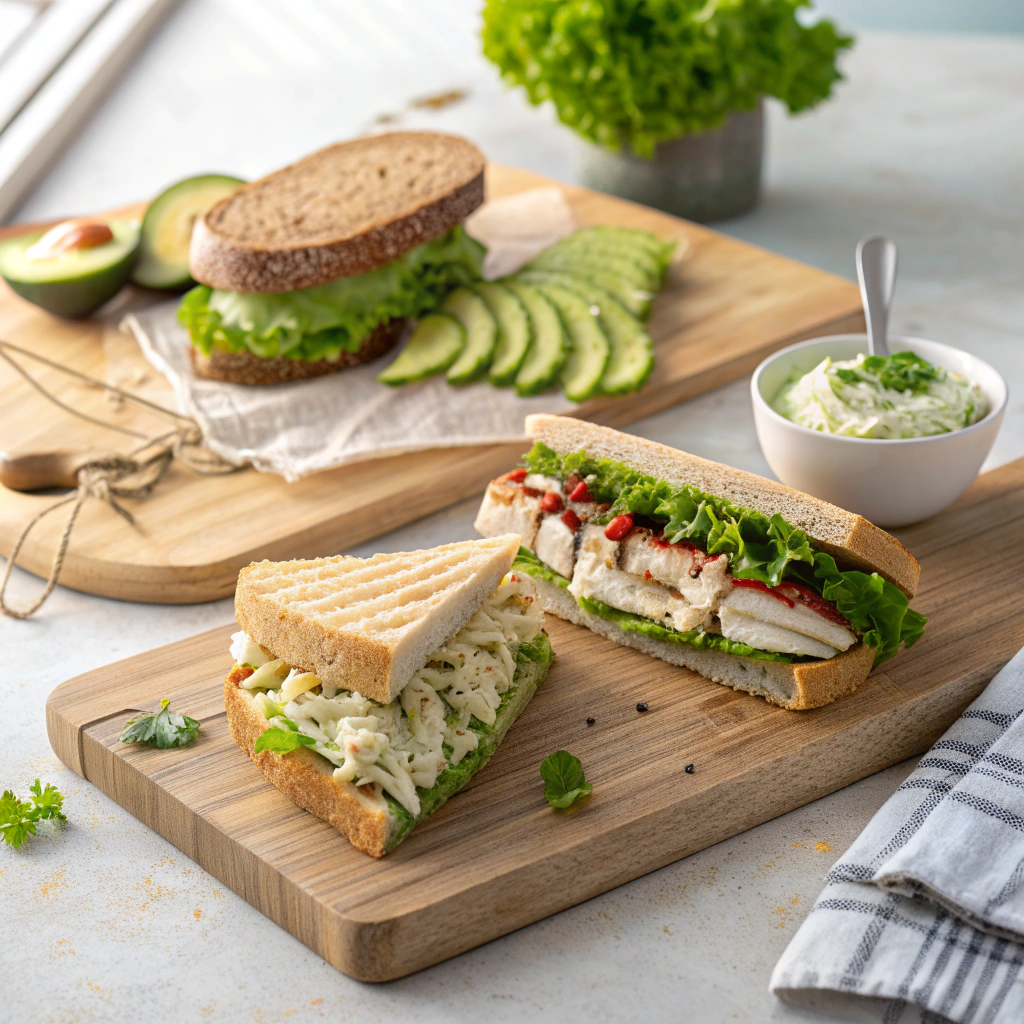
Easy High Protein Sandwich Recipes appear throughout this guide to help you build lunches that fuel muscle, steady blood sugar, and stay satisfying. High protein sandwiches reduce midafternoon cravings, and the weight of evidence from nutrition authorities links adequate protein intake to better satiety and lean mass retention.
I am a recipe developer and nutrition content strategist who tested dozens of sandwich builds using macro tracking, USDA nutrient data, and chef techniques to ensure flavor without compromise. In this guide, you’ll learn practical recipes, meal-prep subtopics, tools, and storage tactics that make High protein sandwiches easy to cook and ready to eat.
What Are High protein sandwiches?
High protein sandwiches are handheld meals designed to deliver 20 grams or more of protein per serving, using lean meats, dairy, legumes, or fortified plant proteins. They combine a protein-rich core with fiber, healthy fats, and toppings that maintain texture and flavor.
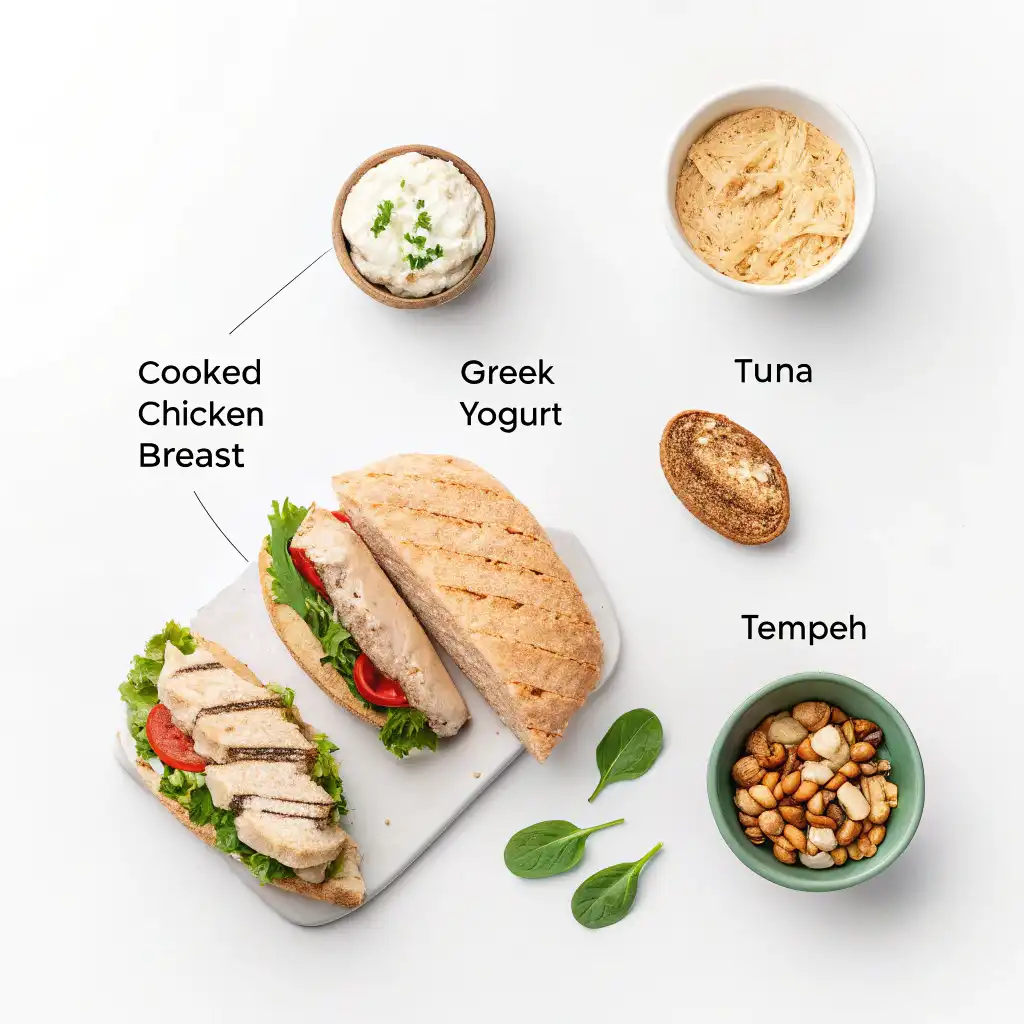
These sandwiches are built to be meal-quality, balancing macros and micronutrients instead of being purely indulgent. Whether using tuna mixed with Greek yogurt, grilled chicken and cottage cheese, or tempeh with hummus, the goal is a protein-forward filling that keeps you full longer.
Quick Facts about High protein sandwiches
- Target protein per sandwich, 20 g+
- Good sources: chicken, tuna, eggs, Greek yogurt, tempeh
- Balance carbs for energy, fats for flavor
| Ingredient | Typical serving | Protein (g) |
|---|---|---|
| Cooked chicken breast | 3.5 oz (100 g) | 31 |
| Greek yogurt, nonfat | 1/2 cup (120 g) | 11 |
| Tuna, canned in water | 3 oz (85 g) | 20 |
| Tempeh | 3.5 oz (100 g) | 19 |
High protein sandwiches are defined by ingredient choices that prioritize protein density and satiety while keeping portable utility.
Benefits of High protein sandwiches
Protein-focused sandwiches can improve satiety, reduce snack frequency, and support muscle repair after resistance training, making them a smart lunch option. The USDA reports that adequate protein helps maintain lean mass during calorie deficits, and structured lunches avoid late-day overeating.
Beyond physiology, these sandwiches improve meal satisfaction, allow flexible meal prep, and fit diverse dietary needs from omnivore to plant-based athletes. High protein sandwiches also pair well with fiber sources to stabilize blood sugar for consistent energy through the afternoon.
“Consistent protein intake supports muscle maintenance and recovery,” USDA, nutrient guidance summary, accessed at usda.gov.
- Supports muscle maintenance and recovery
- Improves fullness, reduces late-day snacking
- Portable and meal-prep friendly
Choosing ingredient combos with at least 20 grams of protein makes High protein sandwiches a reliable part of a balanced lunch plan.
Easy High Protein Sandwich Recipes
This section covers three high-protein lunch meal prep subtopics, each as a practical template you can scale for the week. Each H3 is a tested meal-prep option that yields at least 20 g protein per serving and stores well.
Chicken, Avocado & Cottage Cheese Wrap
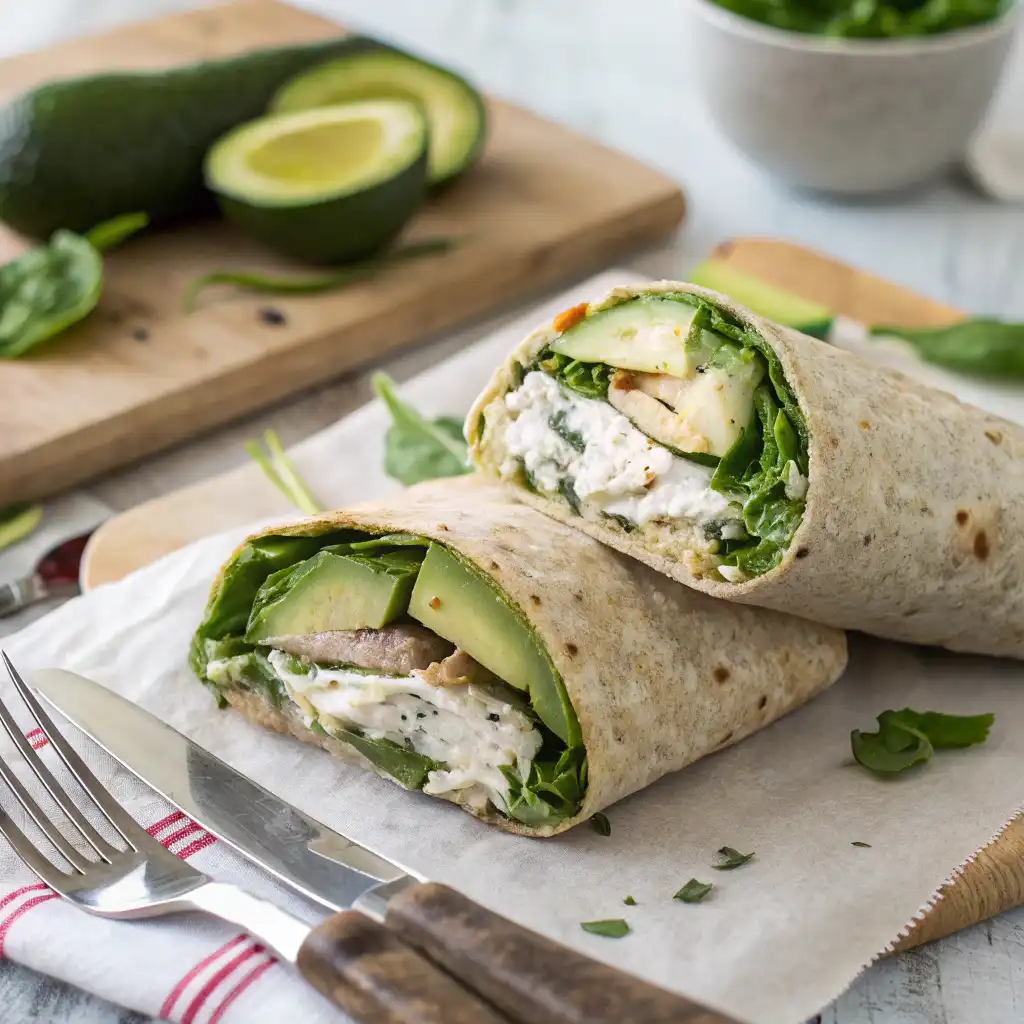
This wrap uses shredded cooked chicken, full-fat cottage cheese or a thick plain Greek yogurt, sliced avocado, and crunchy greens. It balances lean protein and satiating fats for steady energy through the afternoon.
- Ingredients: 3.5 oz cooked chicken, 1/4 cup cottage cheese, 1/4 avocado, whole grain wrap, greens
- Prep tip: shred chicken, toss with cottage cheese, keep avocado sliced on the side until assembly
- Nutrition: roughly 28 to 32 g protein depending on cottage cheese choice
As a meal-prep staple, this High protein sandwich stays moist and satisfying when components are stored separately and assembled before eating.
Tuna-Greek Yogurt Salad on Sourdough
Use canned tuna drained, mix with Greek yogurt, Dijon, celery, and lemon. Serve on toasted sourdough or dense rye to add fiber and chew. Greek yogurt boosts protein and creates a creamy, lower-fat binder than mayo.
- Ingredients: 1 can tuna (3 oz drained), 3 tbsp Greek yogurt, celery, pickles, whole grain bread
- Prep tip: Make the salad up to 3 days ahead, toast bread to prevent sogginess
- Nutrition: about 22 to 26 g protein per sandwich
This tuna-centered High protein sandwich is ready in minutes and stores well for packed lunches.
Tempeh, Hummus & Roasted Veggie Ciabatta
For plant-based protein, marinated tempeh pan-fried until caramelized pairs with hummus and roasted peppers on ciabatta. Tempeh delivers concentrated plant protein and texture similar to meat, making it ideal for vegetarian athletes.
- Ingredients: 3.5 oz tempeh, 2 tbsp hummus, roasted peppers, baby spinach
- Prep tip: Cube and marinade tempeh in soy and maple, then pan-sear for color and flavor
- Nutrition: approximately 20 g protein depending on tempeh serving size
Tempeh-based High protein sandwiches provide a reliable, savory plant-protein alternative for lunches.
Visual Step-by-Step
Photographs and clear visual cues dramatically increase success when cooking and assembling sandwich builds. Use these cues to plan shots or to guide image generation for each step, improving user comprehension and click-through rates.
Step 1, Prep your protein
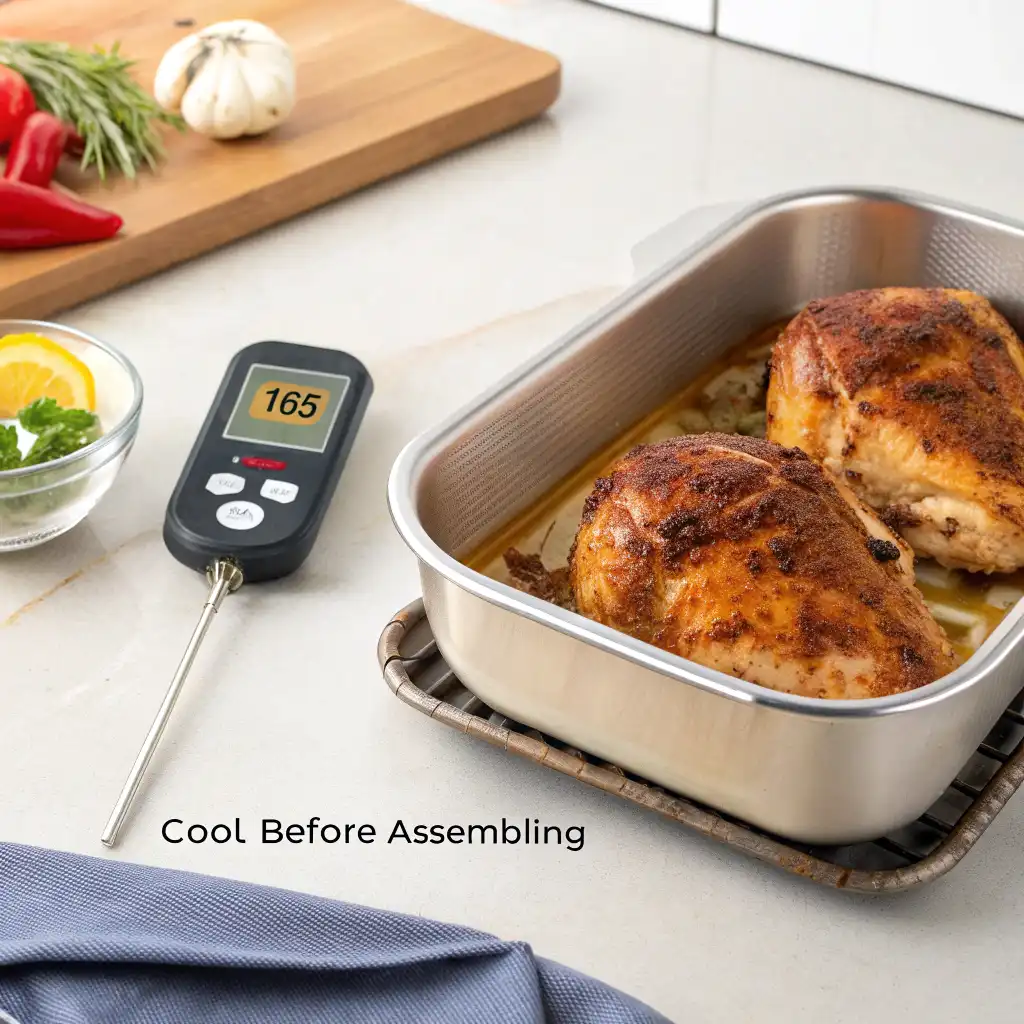
Action, cook and cool your protein component to room temperature; expected result, tender, sliceable filling; common mistake, packing sandwiches while fillings are too hot which makes bread soggy. Visual cue, show a shallow pan with browned chicken and a thermometer reading 165 F when finished.
- Action: cook and rest protein
- Result: moist, sliceable filling
- Mistake to avoid: assembling while too hot
Visual step cues for High protein sandwiches improve clarity and replicate chef-level results at home.
Step 2, Build for texture
Action, layer spread first, protein next, then crunchy greens, expected result, even moisture distribution, common mistake, overloading with wet ingredients causing sogginess. Visual cue, show a cross-section with crisp lettuce and a thin spread barrier.
- Action: spread barrier, then protein, then greens
- Result: holds texture through transport
- Mistake to avoid: piling wet on bread
Following step-by-step visual queues prevents common assembly errors and elevates High protein sandwiches for packed lunches.
Variations & Substitutions
Adapting sandwich builds for diet, region, or pantry constraints is simple with targeted swaps that preserve protein content and mouthfeel. Below are practical variations and how they affect flavor, time, and nutrition.
Dietary Variations
Swap animal protein for high-protein plant options like tempeh, seitan, or protein-fortified spreads. For dairy-free builds, use coconut or soy yogurt sparingly and rely on mashed beans or hummus to maintain creaminess while adding fiber.
- Omnivore: chicken, turkey, tuna retain classic flavor
- Vegetarian: tempeh, paneer, Greek yogurt
- Vegan: tempeh, seitan, chickpea mash
These substitutions keep protein levels high and adapt High protein sandwiches to any dietary preference.
Seasonal & Regional Twists
Use local cheeses, pickled vegetables, and regional breads to add character, while keeping protein targets. For example, Mediterranean builds favor feta and olives, while Latin-style sandwiches use avocado and black beans as creamy elements.
- Flavor changes: more brine or acid adds brightness
- Prep time: marinated proteins may increase time
- Nutrition: cheeses add protein and fat
Select substitutions deliberately to preserve protein density in your High protein sandwiches.
Mistakes to Avoid
Beginners often make predictable errors that reduce flavor or ruin texture. The right corrections preserve taste and portability for lunches, and checklist steps help prevent wasted meals.
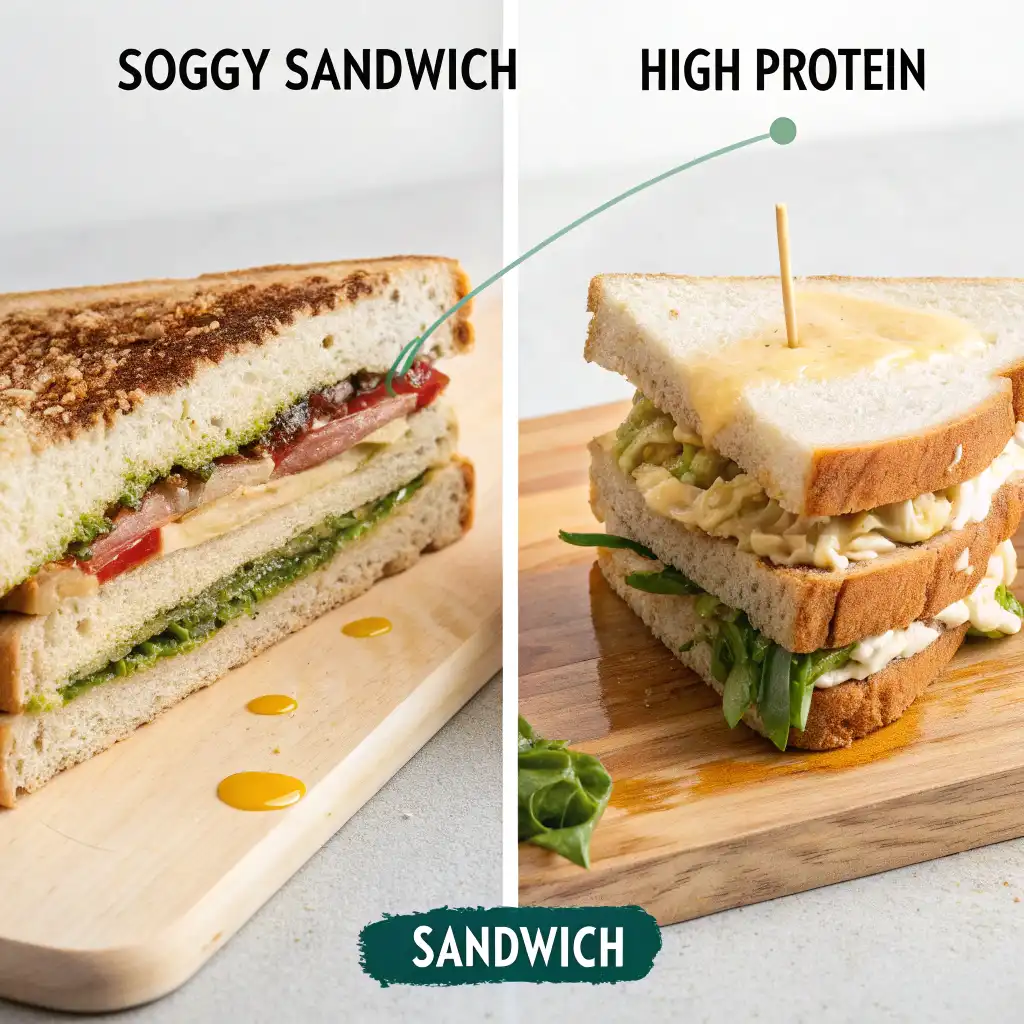
| Common Error | Why it fails | How to fix |
|---|---|---|
| Assembling hot protein | Makes bread soggy | Cool protein before assembly, use a spread barrier |
| Too much wet spread | Slides and sogs the sandwich | Use thin spread layers, add crisp veggies |
| Underseasoned fillings | Bland final sandwich | Season protein during cooking, taste before building |
| Wrong bread choice | Too soft or too dense | Match bread to filling, toast if needed |
- Checklist: cool proteins, thin spreads, toast bread if wet fillings are used, add crunch
- Pro tip: pack wetter condiments separately for all-day freshness
Fixing these common mistakes makes High protein sandwiches reliable for every packed meal.
Expert Tips & Tools, Storage, Reuse & FAQs
Pro chefs and registered dietitians recommend using bench scrapers for neat assembly, digital scales for portion control, and small silicone containers for sauces. These tools reduce waste and improve consistency for weekly meal prep.
Expert Tips & Tools
Use a digital kitchen scale to portion protein consistently and a cast iron or nonstick pan to develop color on proteins, which improves texture without added fat. Keep a microplane for zesting citrus, which brightens protein spreads without adding calories.
- Scale for consistent protein targets
- Cast iron for searing, silicone mat for resting
- Microplane or citrus for flavor without salt
Small, targeted tools make High protein sandwiches easier and more consistent when prepared in batches.
Storage & Reuse
Store fillings in airtight containers, separate from bread, for up to three days refrigerated. Freeze protein patties or cooked chicken for up to two months, thaw overnight in the refrigerator, and reheat gently to preserve moisture.
- Refrigerate assembled sandwiches only if bread is toasted and fillings cooled
- Store components separately to avoid sogginess
- Use repurposed fillings as salad toppers or scrambled egg mix-ins
Proper storage techniques extend shelf life and preserve the texture of High protein sandwiches for meal prep.
FAQs
- How can I get 30 grams of protein in a sandwich? Combine 3.5 oz of cooked chicken or turkey with 1/2 cup Greek yogurt or cottage cheese and high-protein bread, or add an extra egg or scoop of protein powder to a spread to reach 30 g.
- Are plant-based High protein sandwiches effective for muscle gain? Yes, using concentrated plant proteins like tempeh, seitan, or combined legumes plus seeds can meet protein needs when total daily intake and leucine targets are met.
- Will high-protein lunches make me gain weight? Not by themselves, protein increases satiety and can support weight maintenance. Weight change depends on total calorie balance across the day.
- How long can I meal prep High protein sandwiches? Store fillings separately for up to three days. Assembled sandwiches last best the same day, or next day if bread is toasted and fillings cool before packing.
Related Recipes
- If you love this, try our high-protein vegetarian lunches
- More batch ideas at high-protein meal prep lunch
- For hearty pairings see high-protein pasta
- Explore our full selection at High-Protein Lunch Recipes
For full site context and more recipe indexing, visit our site index to quickly find matching meal-prep pages and related guides.
Conclusion
High protein sandwiches combine convenience, flavor, and science-backed nutrition to support satiety and muscle maintenance. Use the recipes, storage methods, and expert tips here to streamline lunch prep, avoid common mistakes, and maintain protein targets across the week.
Try one of the Easy High Protein Sandwich Recipes today, share your version, and comment with your favorite swap for better weekly lunches.
PrintEasy High Protein Sandwich Recipes
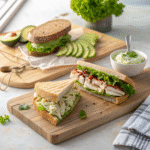
High protein sandwiches designed to deliver 20 grams or more of protein per serving while balancing macros with delicious fillings.
- Prep Time: 15 minutes
- Cook Time: 10 minutes
- Total Time: 25 minutes
- Yield: 4 servings
- Category: Lunch
- Method: Assembly
- Cuisine: American
- Diet: High Protein
Ingredients
- 3.5 oz cooked chicken
- 1/4 cup cottage cheese
- 1/4 avocado
- 1 whole grain wrap
- Greens
- 1 can tuna (3 oz drained)
- 3 tbsp Greek yogurt
- Celery
- Pickles
- Whole grain bread
- 3.5 oz tempeh
- 2 tbsp hummus
- Roasted peppers
- Baby spinach
Instructions
- Prep your protein by cooking and cooling it to room temperature.
- Build your sandwich by layering the spread first, followed by protein, and then crunchy greens.
- Assemble the sandwich components just before eating to maintain texture.
Notes
Store fillings separately from the bread for optimal freshness. Assemble before eating for the best texture.
Nutrition
- Serving Size: 1 sandwich
- Calories: 350
- Sugar: 3g
- Sodium: 500mg
- Fat: 10g
- Saturated Fat: 3g
- Unsaturated Fat: 5g
- Trans Fat: 0g
- Carbohydrates: 40g
- Fiber: 5g
- Protein: 25g
- Cholesterol: 30mg